
Discover
Danish Producer of Trout and Roe


Discover the story behind your trout
We raise our trout in stages that follow the fish's own life cycle, from the spring water where the eggs hatch to the open sea.
Spring water
The eggs hatch in fresh spring water, where the trout develop into young fish.
Freshwater
The young trout grow up in our 18 freshwater farms in Denmark.
The sea
They then move to one of our three sea farms in the Great Belt.
Who we are
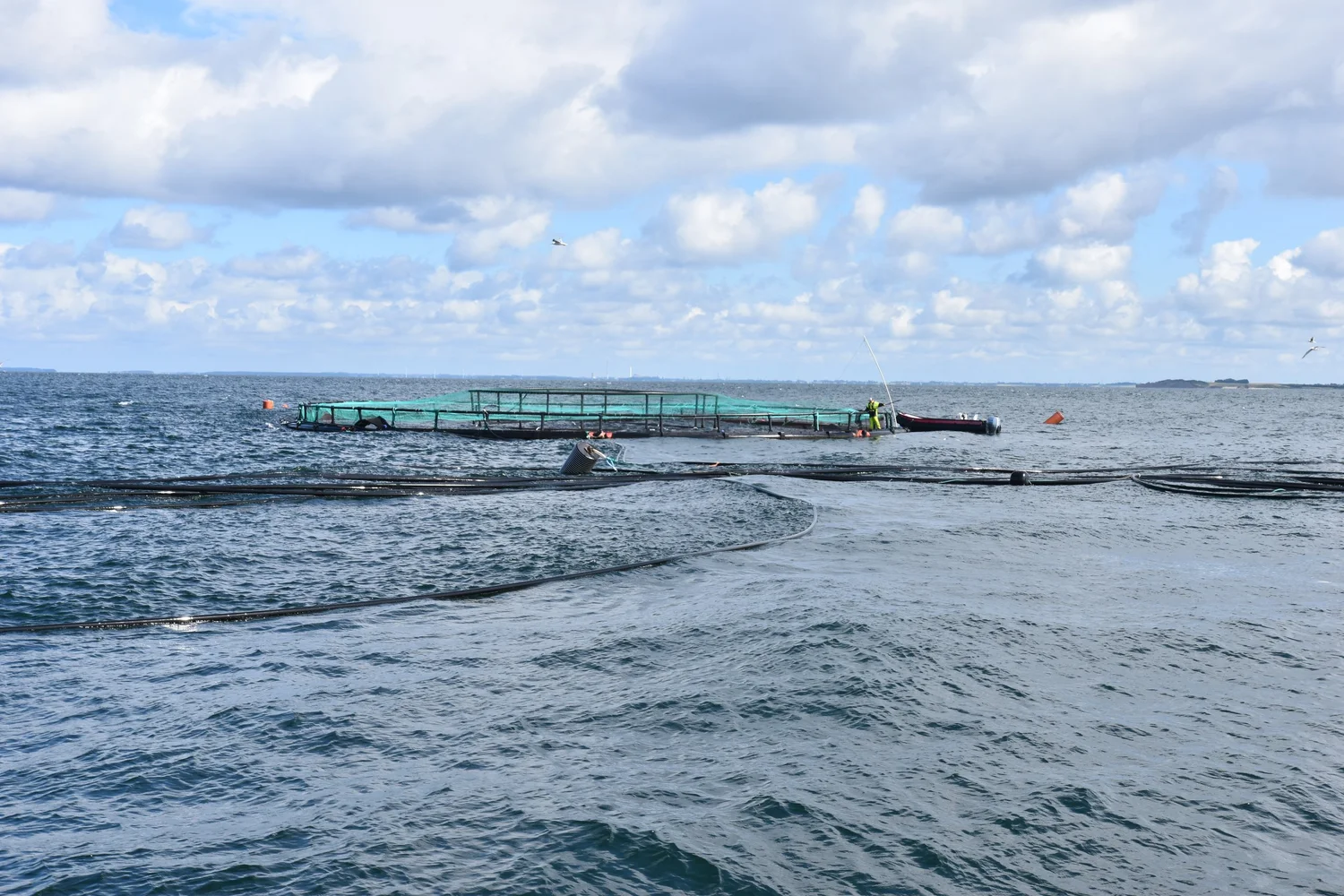
Musholm is a Danish trout producer based at Reersø harbour on west Zealand, on the Great Belt. We farm across 18 freshwater farms and three sea farms, and follow each trout from the egg all the way to the sea.
Producing trout also means taking responsibility for our impact on nature. That is why we were the first fish farmer to set Science Based Targets for Nature.
See where we are →“We want to take responsibility locally, where we raise our fish, but also in the parts of the world where the ingredients for our feed come from, because our demand also affects nature there.”
— Thorbjørn Harkamp, CEO of Musholm
Nutritional information
Our trout is high in protein, omega-3, vitamin D and vitamin B12. Per 100 g of raw fillet:
Additional nutritional information
Energy – 149 kcal / 623 kJ (7.5% RI*)
Protein – 20.8 g (41.6% RI*)
Fat – 7.2 g (10.3% RI*)
Saturated Fat – 1.0 g (5.0% RI*)
Carbohydrates – 0 g (0% RI*)
Salt – 0.1 g (1.7% RI*)
Omega-3 – 1.4 g (–)
EPA + DHA – 0.75 g (–)
Omega-6 – 1.3 g (–)
Cholesterol – 46.45 mg (–)
Vitamin D – 4.94 µg (98.8% RI*)
Vitamin B6 – 0.21 mg (15.0% RI*)
Vitamin B12 – 2.49 µg (99.6% RI*)
Calcium – 18 mg (2.3% RI*)
Iron – 0.29 mg (2.1% RI*)
Magnesium – 26 mg (6.9% RI*)
Phosphorus – 210 mg (30.0% RI*)
*Percentages are of the Reference Intake (RI) for an average adult (8400 kJ / 2000 kcal), as set out in EU Regulation No 1169/2011 on food information to consumers. Values per 100 g (3.5 oz) of raw fillet. – No reference intake established.
Musholm Vest, where most of our trout is raised, is certified to the Aquaculture Stewardship Council (ASC) standard.
ASC sets internationally recognised standards for fish farming. They cover the environment, the welfare of the fish, and the people who work on the farm.
Raised on an ASC-certified farm
The first fish farmer with Science Based Targets for Nature
Our fish depend on healthy seas, both where we farm and where their feed comes from. So we have set three targets to protect nature, as part of the SBTN's Ocean Hub pilot.
1. Less wild fish in our feed
We are cutting the blue whiting in our feed by more than half, and using more by-products and alternative ingredients in place of wild-caught fish.
By 2029
2. Restoring reefs in the Great Belt
We are helping to restore 42 hectares of rock reef and 14 hectares of blue mussel reef, around 80 football pitches. We are also cutting the anti-fouling treatment on our sea farm nets every year.
By the end of 2029

3. Protecting sea life where our raw materials are sourced
Through fishery improvement projects in the North Sea and South America, we are working to protect threatened species from fishing gear.
By 2029.
What is the Science Based Targets Network?
An organisation that helps companies and cities set credible targets to halt and reverse the loss of nature.
What our trout eats
Feed is one of the biggest parts of a farmed fish's environmental footprint. Our trout eat Blue Impact feed from BioMar, which measures the footprint of every feed so it can keep improving it.
Three numbers we track
BioMar measures three things in our feed, and uses them to improve it year-by-year. Hover over or tap each one below to see where it sits on the scale.
Carbon footprint
1.44 kg CO₂e of greenhouse gas emissions for every kg of feed produced.
Circular & restorative
About a third (32.6%) of the feed is made from by-products and from crops grown with regenerative farming.
Wild fish in the feed
About 1.1 kg of wild forage fish goes into the feed for each kg of trout we raise. We are working to bring this down.
Get in touch
-
Musholm A/S
Reersø Havn
Standvejen 101
4281 Gørlev
Denmark -
Teis Volstrup
Head of Public Affairs and Communications
+45 58859007
tvo@musholm.com